AI Automation
Spectrum AI Voice Agent
AI-powered outbound voice automation system designed to automate calling workflows, process conversations in real time, detect voicemail, and record call activity for CRM workflows.
View projectPurpose-built software products
Purpose-built SaaS products, dashboards, portals, and internal platforms.
Overview
SaaS development turns a validated product or operational model into a maintainable platform. The architecture brings together identity, roles, workflows, subscriptions, reporting, integrations, and administration without assuming every product needs the same complexity.
Business benefits
These are areas the service is designed to improve. The outcome depends on scope, adoption, existing systems, and business context; no metric is guaranteed.
The platform is shaped around the product model instead of constrained by generic software.
Roles, tenancy, data, and operations are structured for realistic future change.
Authentication and authorization reflect product roles and sensitive boundaries.
Typed code, documentation, and repeatable deployment support long-term ownership.
Ideal customers
Fit depends on the problem, constraints, readiness, and value of a tailored approach—not company size alone.
Teams moving from validated concept toward a focused, production-ready first product.
Products that need stronger architecture, operational tools, roles, or integrations.
Organizations turning a repeatable internal workflow into a managed platform.
Implementation process
The stages create decision points and quality checks. They do not imply a universal project duration.
Clarify goals, users, constraints, current systems, evidence, and decision ownership.
Define scope, priorities, dependencies, milestones, and the smallest responsible release.
Map data, integrations, security boundaries, environments, and long-term ownership.
Build through visible, reviewable increments with typed implementation and clear states.
Review behavior, accessibility, performance, security considerations, and failure paths.
Deploy through controlled environments and verify production behavior and handoff.
Use production context to plan maintenance, monitoring, and responsible improvements.
Technology stack
The final stack follows requirements, integrations, ownership, and risk. These tools are capabilities—not partnerships or mandatory choices.
Service features
The final feature set follows the agreed scope. Each capability is presented as an option, not a universal package or promise.
Secure identity flows can support invitation, recovery, and account lifecycle needs.
Permissions align product capabilities with customer, team, and administrative roles.
Role-specific views make tasks, state, and relevant product information visible.
Plans, entitlements, billing events, and account state can be integrated where needed.
Useful operational and customer reporting can be designed around real decisions.
Approved APIs connect the product to payments, communication, media, and operations.
Deliverables
Exact deliverables are confirmed in scope. This checklist describes the practical outputs commonly considered for this service.
Latest portfolio
Only real, currently published portfolio records appear here. Their relationship to this service depends on the context available in each project.
AI-powered outbound voice automation system designed to automate calling workflows, process conversations in real time, detect voicemail, and record call activity for CRM workflows.
View project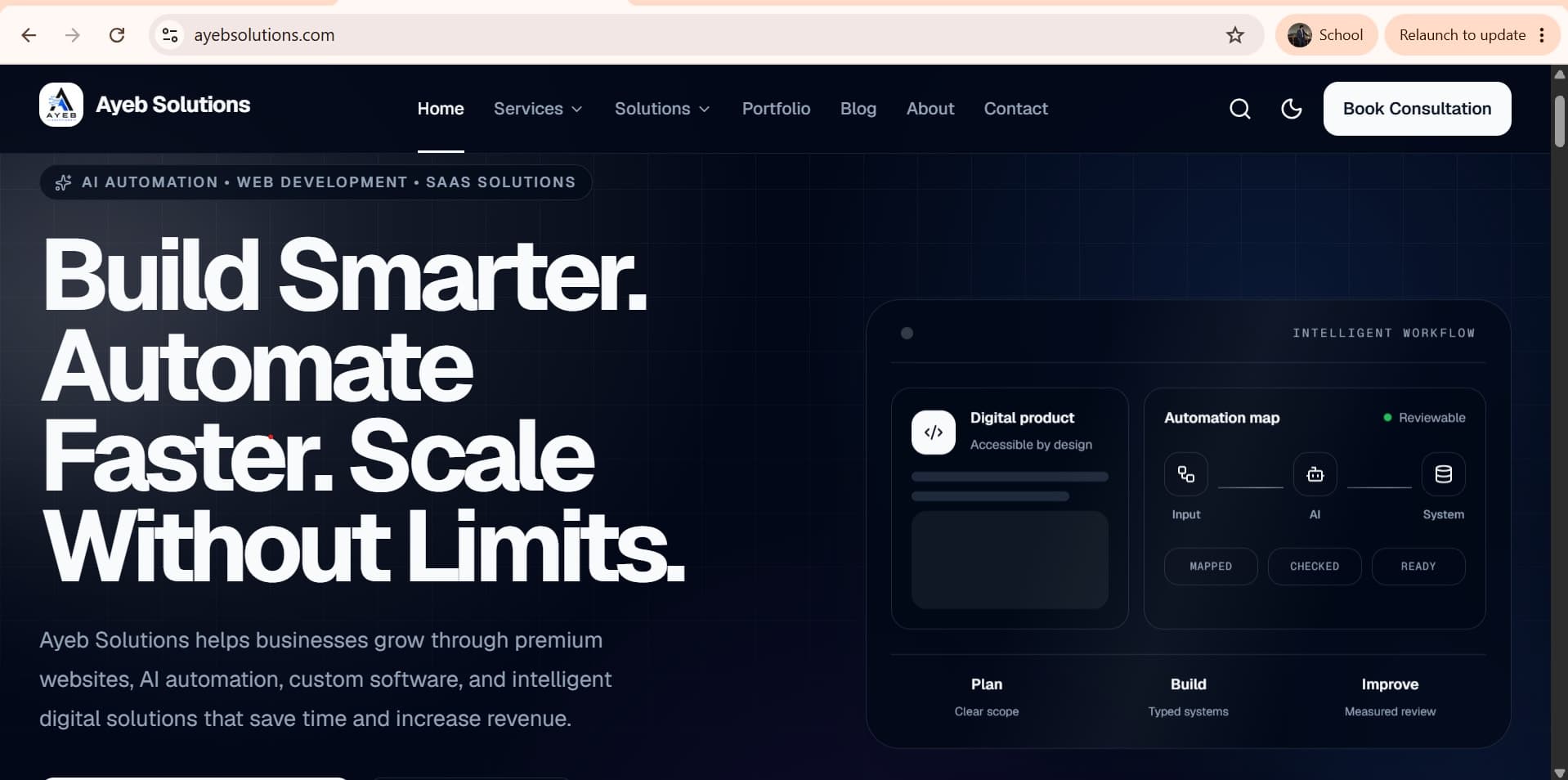
A modern agency website built for Ayeb Solutions to showcase services, portfolio work, content, and AI automation capabilities while providing a complete content management and lead management system.
View projectService FAQ
Practical answers about fit, planning, implementation, risk, ownership, and support.
Yes. A responsible MVP focuses on the smallest coherent product that tests important assumptions without creating avoidable security, data, or ownership debt.
No. Tenancy should follow the product model, isolation needs, roles, and expected customer structure rather than being included automatically.
Yes, when the product requires them and the selected provider supports the business, region, billing model, and compliance context.
Architecture considers realistic usage, data boundaries, expensive operations, caching, deployment, monitoring, and likely change without adding premature complexity.
Ownership and licensing terms should be stated explicitly in the project agreement. The default assumption should never be left ambiguous.
Potentially, after reviewing architecture, code, data, environments, usage evidence, constraints, and current operational risks.
Related services
Explore complementary service areas. The right engagement may combine disciplines, but only where the business context requires them.
Fast, accessible websites and web applications built around clear business goals.
Explore serviceReviewable AI-assisted workflows that connect tools, reduce repetition, and support teams.
Explore serviceClear, accessible interfaces shaped through research, structure, and reusable systems.
Explore serviceCommerce experiences connecting catalogues, payments, inventory, and operations.
Explore serviceInternal systems, integrations, and operational tools tailored to real workflows.
Explore serviceBuild the right next step
Bring the goal, current workflow, users, systems, and constraints. We’ll help frame an appropriate discovery and proposal path.